French Linen

Sunday, June 19, 2022

Family Tri’ing in the Poconos


When I started triathlons 11 years ago it was part of some New Years’ Resolutions to engage my creative side by writing about my triathlon ventures and staying connected to family, and that hasn’t changed! As I looked for 2022 races, and with historical June races like the Philadelphia Triathlon and the Stamford Triathlon no longer in existence, I saw the Philly Tri Club was making the Kinetic Multisports Poconos Triathlon a focus race.  I recalled a fun stop at Lake Wallenpaupack years ago so this equidistant location seemed like the perfect venue for us to meet my parents and Barb for a triathlon weekend.  Mike and I planned to do the Olympic on Saturday, and Barb planned for the Sprint on Saturday.

We made two mistakes before the weekend even began.  I discovered that I had left my Torpedo water bottle for easy aero fueling at our home on Martha’s Vineyard.  Fortunately, our local CT tri shop, Pacific Cycling and Triathlon had one in stock!  We made the mistake of checking routes during non-peak travel times so we thought the route that goes across the Tappan Zee Bridge by our favorite NY bagel place would take the same as the Northern route over Bear Mountain, but our bagel detour ended up costing us about an hour in traffic.  


I had found a house right on the lake with a dock, and upon arriving we discovered we could
even see and kayak to the swim course from the house.  Upon arrival, we hurried over to check in, review the transitions, and check out the bike course, a 29-mile course, which is 3 miles longer than a typical Olympic race.  Oh my – the hills on the bike course were daunting.  There was a nice downhill for the first half, but the second half featured a 2-mile climb followed by more rolling hills.


We headed back for our traditional triathlon eve pasta dinner and another hour of race preparations.  Things moved at pre-race triathlon warped speed and before we knew it, it was past our intended bedtime.


We headed out the next morning around 5:45am.  Unlike so many races, parking was easy and close in the high school parking lot.  We had plenty of time to secure a good transition spot and meet up with our Philly Tri Club for a picture.  


SWIM:  45:41 - After the long course athletes went off on the swim course, it was our turn.  The water was a comfortable 70 degrees and having not swum in a wetsuit for some time, I tried to stay calm and slowly ease into the swim.  Normally I’m good at sighting but for some reason, I was having trouble following the right buoys of this rectangular, double loop course.  On 3 occasions kayaks were directing me to get back on course, including one time when I was pointed to the wrong buoy.  I thought for sure I must have swum extra, but my watch indicated I swam right around .9 miles, but I know I wasted a lot of time since my pace was recorded as 3:03/100 yards.

Of course swimming!


T1:  7:31 - The somewhat long transition up the hill on rocks didn’t bother me as much as I thought it would.  After “being mad at the swim course”, I was just happy to get out of the water. And then, I couldn’t get my wet suit over the chip. I wasn’t thinking straight and should have just taken it off!


BIKE:  1:53:43 - The bike was Mike’s lowpoint and my highpoint.  As he was exiting the high school, he hit a bump that sent him to the ground and caused a flat tire.  Or maybe the tire was a little flat to begin with given he had had trouble with the valve.  The good news for him was that the race mechanics were right there and helped fix it.  So on he went with a bloody elbow and bruised hip.


As for me, I knew I wanted to make up time on the downhills so I stayed aero as much as possible and flew as fast as 40 miles mph down the hills.  I was so glad we had driven the course the night before so I was ready for a couple of sharp turns into hills, and I was mentally ready for the 2 mile climb.  As I saw many people give up and walk their bike up the hill, I was determined to stay on the bike.  And, I did!  The remaining rolling hills weren’t really rolling so I continued the quest to climb them all.  In the end, I could tell my legs were tired but I gained huge bike confidence on this course.  In fact, averaging 15.3mph, I had the second fastest bike time in my age group and it proved to be my best event this time.


Killer 2 mile climb!

T2: 1:36 - Non-eventful and fast!


RUN:  1:11:35 - Normally the run is my best event, but not this time.  Between legs that were toast and a slightly hilly, trail course with just about every surface – pavement – grass – dirt – bark mulch – sinking mulch – mud – stones – uneven pavement – there would be no run PRs today and a slow 11:31 pace.  The best part of the course was the high school running track where I waved to Mom and Dad as I made my second loop, and gladly finished.


This was certainly my longest Olympic, finishing at 4:00:08 – yes, wish I had been paying attention to the total time to break 4 hours.  I used this race as one of my race rehearsals for our upcoming half Ironman, and I’m glad to have worked out some kinks and get my race brain back on.  But most of all, I was happy to see some of my Philly Tri friends and spend time with family in a beautiful lake setting.  Oh yeah, and remember Nala, from last year – the foster dog.  Proving she can be a good traveler and companion during triathlons, she’s now a permanent member of the family!


Nala competed in the kayak-swim event!


Tuesday, May 10, 2022

TriDot Ambassador Camp at the Ironman World Championships

My heart is full, and my triathlon brain is enlightened after spending the last four days at TriDot’s 2nd Ambassador Camp in St. George, UT, and the first since we first all met in February 2020.  Like the last time, one of the best aspects was meeting our TriDot ambassador, coach and staff members in person.  Since the last ambassador camp, I’ve met some my fellow ambassadors in person at races and through meet ups when we found ourselves in the same location so this time, I formed deeper connections and met new friends too.  We had amazing speakers who inspired us each day:

Day 1: “Triathlon is a little sport with a big heart.” – Bob Babbitt


After long and complex travel to arrive at the beautiful Red Mountain Resort in St. George, more than 70 TriDot Ambassadors were treated to an opening talk by Bob Babbitt, co-founder of Competitor magazine and the Challenged Athletes Foundation, which has helped over 26,000 individuals with physical challenges to get access to sports since 1994.  Bob shared his stories from racing in the 3rd ever Ironman in 1980, and in five more events during the early days of the Ironman, which was founded in 1978 by John and Judy Collins.  He recounted his own stories that have been told through different perspectives of those early days athletes before Ironman was a known brand and when it was a local, niche event that ultimately became famous as ABC’s “World Wide of Sports” happened to be in town for a cliff diving event in 1980.  From there many California athletes got wind of the event and showed up the following years, including Julie Moss, who was famously captured in 1982 as she struggled and crawled to the finish line, and Kathleen McCartney passed her to win the women’s title.  But it was Julie who became famous and made the event a household name as callers flooded into ABC wanting to know more about her and if she had actually survived the event.


Bob Babbitt gave the opening talk

Bob also shared stories how in the 1980s, Dave Scott became the reigning men’s champion with wins in 1980, 1982, 1983, 1984, 1986, and 1987, and Mark Allen was determined to have his own title.  It took seven attempts for Mark to win the championship in 1989 and then go on to win five more.  Bob co-founded Competitor magazine with Lois Schwartz in 1987, and a 1989 cover photo showcased Lois’ famous photo of Mark and Dave running side by side with the headline IRONWAR, when the race was still undecided with less than two miles to go. The stories of these early days make for a good book, captured in “Iron War, Dave Scott, Mark Allen & the Greatest Race Ever Run” by Matt Fitzgerald.  


Like many big-hearted entrepreneurs, Bob has found a passion and purpose in the Foundation he co-founded.  He relayed stories of the kinds of athletes the Foundation has helped, with a focus on Emmanuel Ofosu Yeboah from Ghana, who first just asked for a bike so that he could raise awareness for the needs of the disabled, having lost his leg.  The Foundation ultimately made Emmanuel famous as he met with Kofi Annan from the UN and President George W. Bush, allowing him to return to Ghana and convince the President to initiate legislation to help the disabled and show his country that disabled people can be just as able as those without a disability.  His story is highlighted in a documentary, Emmanuel’s Gift, narrated by Oprah Winfrey. 


The collection of Bob’s stories reminded us how we ended up St. George, UT for the 2021 annual Ironman World Championship.  However, this was the first time in the race’s history that it was not being held in Hawaii due to the Covid cancellations that transpired in 2020 and 2021.


Day 2: “Treat yourself as an individual, don’t just copy what other athletes do with regards to hydration.” - Andy Blow


On day 2, we got to experience a portion of the Ironman bike course up Snow Canyon.  It was an epic ride with over 4,100 feet of elevation that athletes experience on tired legs as they hit mile 100 approaching the top – that is after they have already experienced nearly 5,000 feet of elevation.  The red rock vistas made for stunning background with the desert foreground.


Riding up Snow Canyon!
In the afternoon we heard from Jan Sibbersen, a former Pro triathlete from Germany who holds the world record for the Kona swim, a feat he accomplished in 2018 at the age of 43 – after he actually had retired and was racing as an age group athlete.  Jan was an investment banker who decided to go pro in 2001.  Upon retiring, it was fitting that he founded the wetsuit company Sailfish.

We also nourished our brains with talks by Andy Blow, a former British pro who founded Precision Hydration, and Dr. Krista Austin, a PhD in Movement Science, who helps pros and amateurs optimize their performance with nutrition and training and racing fueling plans.  They say nutrition is the 4th discipline and these talks further educated us on it.  Most helpful, many of us opted to do a sweat test and receive a personalized plan for our electrolyte needs.  Contrary to popular belief, you do not have to work out and sweat to do a sweat test.  It can be done while sitting with electrodes in your arms.  The sweat test measures the amount of sodium your body releases, which is genetic and does not change much over time or based on other environmental factors.  Your sweat rate does change with environmental factors.  It’s a fascinating area of science that Andy was fueled (pun intended) to pursue based on his academic background in Sports and Exercise Science and his experience having struggled in hot weather races as a pro triathlete.  This topic is so interesting that I will dedicate a future full blog post to it.


Day 3: “Dreams don’t happen at the speed of Twitter.” – Mark Allen


Friday began at 6:00am with my functional movement screening with B.J. Leeper.  BJ holds a Doctorate in Physical Therapy and Rehabilitation Science who specializes in comprehensive movement testing and injury testing among athletes.  BJ is exploring methods to allow athletes to self-screen themselves so that they can pinpoint weakness areas and understand how to correct them.  I was in a group of three and it was interesting to see how we each had different weakness areas.


After breakfast we set out for our second day of cycling, this time going up Red Hills Parkway and Skyline Drive.  After elevation of more than 3,100 feet, I then opted for another ride up Snow Canyon.  It was definitely harder on tired legs, but my legs were nowhere near as tired as the athletes would face the next day.


In the afternoon, we headed to a local community pool for a swim session – and waited for our “surprise” with anticipation.  Finally, our camp director, John Mayfield, introduced Mark Allen!  Mark talked about the determination that is required to succeed in our sport.  He also encouraged us to get off of our trainers and mix up the environments we train in. He, along with Jan Sibbersen, stayed on the pool deck throughout our swim session to give athletes pointers.

Mark Allen was our surprise guest!

We concluded our day with Jeff Boher, founder and CEO of TriDot, giving us a preview of new features to come.  Jeff’s new goals are to “make training as fun as racing” – but we are sworn to secrecy on what that means:-)

That evening after dinner I had the pleasure of sitting down and engaging with Tom Watson as we recorded a short interview for one of his upcoming podcasts in which I talk about how structured training has helped take me to new levels – stay tuned!


Day 4:  “Let’s bring them home!!!” – Mike Reilly


Saturday began with a 4am alarm – and I wasn’t even racing! The TriDot Ambassadors piled into vans, and we headed over to Sandy Hollow to work the T1 swim transition for the Ironman World Championship. Our jobs included directing men and women athletes to the right tent, helping them as requested with their gear, and watching for signs of medical distress. The water was 64 degrees – very cold, even with a wetsuit. We did have some athletes suffer from hypothermia coming out of the water and some of our volunteers assisted at the medical tent to help warm them up. One woman took an hour to warm up – but she went on to have a great
race and finish with a great time.

Pro Men in T1


One of the great perks of this volunteer stint was that we had an up-close view of the Pros swim transition. We also got to cheer on all of the athletes as they made their way in their age groups to the water. It was interesting to observe the ways different age groups reacted to our enthusiastic cheering – ages less than 30 and over 50 were generally more engaging, while those competitive 30 – 49 groups were focused in their own world.


The TriDot Volunteer Crew

After the last athletes were out of the water, we helped to break down the changing tents and then headed back to the resort for our own transition and refueling, which was quick as we learned that some of our TriDot athletes were on the bike course approaching the resort. We cheered them on as they ascended towards Snow Canyon.


Almost empty!
Some of us loaded up in John Mayfield’s van in hopes of catching the men’s pro finish. As we tried to make our way downtown, we were stopped and rerouted multiple times with detours. We then had our own race fueling issues – we only had 1 mile left on our tank of gas!  John stopped and fueled at our own “aid station” and then proceeded to race down and drop us off at the finish line just before Kristian Blummenfelt arrived with a time of 7:49:18, followed 5 minutes later by Lionel Sanders and Braden Currie, who were just 16 seconds apart.  It was an amazing finish by Lionel who caught and passed Brad just before the finish line to take second place.  Daniela Ryf who had held the women’s lead by 10 minutes for most of the run course, captured her fifth championship title and arrived to the cheers of the crowd followed by Kat Matthews and then Anne Haug.


Many of us stayed in the finish line area the rest of the day to welcome home our fellow TriDotters and athletes, all of whom we had sent off that morning.  The course is open for 17 hours after the last person enters the water, although you technically have to finish within 17 hours and meet intermediate cut offs to not receive a Did Not Finish (DNF). At midnight, with one hour to go, Kristian and Daniela were at the finish line to give the last wave of finishers their medals. Mike Reilly, the famous voice of Ironman, came out onto the red carpet and hosted the greatest party in Ironman – enthusiastically revving up the crowd and welcoming home the last finishers with his famous, “YOU ARE AN IRONMAN!!!"


Epilogue:


I awoke in a fog on Sunday morning after not a lot of sleep. I decided a recovery swim was in order after my extended day and before my long trip home. The texts on our camp What’s App group flooded in. We all were so grateful to the TriDot staff for hosting an amazing experience, and for the memories we made engaging with each other and giving back to sport we love through our volunteering and spectating.


As Bob Babbitt said, “triathlon is a little sport with a big heart”.  Every once in a while you will find unsupportive people in the sport, or see a group get torn apart by politics. At TriDot we are so lucky to have a group of staff, coaches, ambassadors, and athletes who truly support one another. #WeAreTriDot!!!


Sunday, November 14, 2021

Journey 26.2: NYC Marathon Finally Arrives!

In November 2018 Mike and I watched the NYC marathon on TV and had the realization that the 50th anniversary of the marathon would be in 2020. As I wrote in my January 5, 2019 blog post, we investigated the ways to gain entry and decided to participate in the 9+1 program in 2019 to gain guaranteed entry in 2020. Throughout 2019, we ran nine New York Road Runners races and volunteered for one. We spectated the 2019 race and visited the expo to get ourselves oriented and excited. We were so excited in January 2020 when we got the emails confirming our spot to run in November 2020. Of course, we all know what happened to races during the pandemic – CANCELLED!

As we saw the Boston Marathon being postponed in April 2021, we didn’t get our hopes up that 2021 would be the year. But as the vaccines rolled out, we received an email asking us to rank order our preference of which year we wanted to run over the next three years. We each rank ordered based on soonest to latest, but unfortunately, we couldn’t be guaranteed we would each get into the same year’s race. And, of course our real intent had been to run the 50th anniversary year so we really hoped we would gain entry in 2021, but with a smaller field we weren’t sure if that would be possible.  We were delighted to receive confirmation that we were both in for 2021.  

We trained throughout the summer and fall and all of sudden November 7 was approaching. Perhaps as a defense mechanism against being disappointed if it got cancelled, I didn’t feel much about this race as I trained – I was neither nervous nor excited. And then there was the prevailing mindset of “it’s just a marathon” after having done an Ironman – I don’t have to swim or bike before it!  But I knew a marathon could be hard in its own right, especially since I wasn’t finding enough time to get in every workout my training plan called for. The great thing about TriDot is that you do a lot of cross training to stay injury free, but I was having a hard time getting in three swims a week and a lot of my bike and run workouts called for more than one-hour workouts which I found tough to squeeze in during the week.

The emotions finally came to bear when I walked into the expo on Friday to pick up my bib. Seeing all of the inspirational signs brought tears to my eyes. I was really going to do this! Following is my race report…

I sleep well on Saturday night. Thanks to my friend Marjorie, we are staying in her Central Park West apartment, and I’m happy it was a quiet night. It’s 6:00am, and thanks to daylight savings time, I’m wide awake. Mike is just leaving since he has an earlier start time, but I have 90 minutes until I need to head out. I make myself some breakfast and start to get ready. As I go to put my contacts in, I realize they are already in – ugh – I accidently slept with yesterday’s contacts in.  Well, I figure, my hurting eyes will soon be replaced with all sorts of other hurts. I put an extra pair of contacts in my running belt in case I have issues.

I leave the apartment at 7:30am and catch the subway downtown to the Staten Island Ferry. The ferry horn blares as we depart and the runners clap and cheer. We leave Manhattan behind and see theVerrazano bridge in the distance where our journey will begin. Once on Staten Island, we load up in coach buses that weave through various neighborhoods until we get to Fort Wadsworth. Post-race I discover its history. Staten Island, as well as the rest of New York City, was occupied by the British between 1776 and 1783. British forces fortified the area now known as Fort Wadsworth in 1779. After the Revolutionary War, the new American government took it over and used it for various military purposes until it was turned over to the National Park Service in 1994. On this day, nearly 25,000 runners are passing through “the village” with fresh bagels, coffee, Gatorade and water as we watch the waves before us start on the Verrazano bridge that is serving as our backdrop.

We leave Manhattan on the Staten Island Ferrry
The Verrazano Bridge awaits us!


I eat a bagel and drink some coffee before heading over to my green corral area. I try and find my friend Lorraine to no avail. Unfortunately the cell phone service is spotty. Before I know it, they are telling me to enter my gate. I shed my extra clothes and put them in the donation bins, do a final potty stop, and begin some warm-up exercises.  As they have us proceed up to the bridge, Alicia Keys “Concrete Jungle” is playing 

….I'm the new Sinatra, and, since I made it here
I can make it anywhere, yeah, they love me everywhere….
…In New York
Concrete jungle where dreams are made of
There's nothin' you can't do
Now you're in New York
These streets will make you feel brand new
Big lights will inspire you
Let's hear it for New York
New York, New York

I’m excited now! We proceed up to the start line on the bridge and get further inspired with the singing

of the National Anthem.  At 11:20 am, the cannon booms and my Wave 4 is off!!!!  I’m on the lower level of the Verrazano bridge which some would say is not as dramatic as being on the top, but I think it has some slight advantages in less elevation and wind. The longest bridge in New York City, it covers the first 2.6 miles of our race and is named for Giovanni da Verrazzano, who in 1524 was the first documented European explorer to enter New York Harbor and the Hudson River.  The bridge is four years older than me, having been born in January 1964. Today, the $10.17 toll is included in my race fees.

As I get to the other side, I have to go to the bathroom already. The first and only porta potty I see has three people in line so I pass. I follow the lead of two women ahead of me and take a detour behind an overpass, which probably saved me time over the porta potty anyway.

I begin the 11+ mile journey through Brooklyn, where I will run the most miles of any Borough. As we enter into various neighborhoods, I’m already energized by the many spectators – both human and canine!  I love the signs – “touch here for power”, “funny running into you”, “you run better than the subway”, “worst parade ever”, and “no long runs on Saturday means more sex for baby on Friday” among others. I also love the bands – both official entertainment zone bands and the pop-up artists. I high five kids and gain energy from all of the people cheering for us. For the first half of the race I glide easily around my target 9:45/mile pace. I’ve predicted I’ll average around a 10:30 pace but since I feel good I’m going with the fast end of my marathon pace.  I’m moving so fast through this part of the race that I have to remind myself to take in Maurten gels every 30 minutes. I’m also conscious of the need to stay hydrated so I take quick Gatorade walk breaks through about every other aid station.

I hit the 13.1 mile marker at 2:09:54, only a couple of minutes off my half marathon PR. I wonder if I can keep up the pace for the second half of the marathon. Finally, we come to the Pulaski bridge that will take us into Queens. My pace is slowing slightly for a couple miles and then comes the 59th Street Bridge and its incline. As I round up to the top and feel the incline, I pass someone who I recognize as famous amongst runners and triathletes – John Young. John is a dwarf who has completed numerous races including becoming an Ironman at Ironman Maryland in 2016!  If you look up John you will see him quoted as saying, “The only real disability in life is a negative attitude.”  Well, seeing John makes me forgot about the incline and set my sights on the rest of the race. 

I start down the other side of the bridge and look forward to seeing friends who are supposed to be at the 59th Street Queensboro Bridge. It’s hard as a runner to pick people out of the crowds, and just as I’m fearing I may have missed them, I hear a large group of people screaming my name. I don’t even recognize them all but my friend Carole tells me later that a group of people banded together and decided to cheer on each others’ runners!

I head up First Avenue and while the crowds continue to give me energy, I feel my pace slowing. At one point the avenue does have a long incline that is enough to feel.  I’m able to keep about a 10:30 pace for miles 16 – 18 and then it starts to get harder. I pass many older runners who have accomplished amazing feats as the signs on their back proclaim, “I’ve completed 44 NYC marathons, 44 in a row.”

Finally I am at the Willis Avenue Bridge and enter into the Bronx at mile 20. The hurt factor increases but I think of our friend Dave Kuntz, who now lives in CA, who said to say hello to the Bronx for him. Fortunately I’m only in the Bronx for one mile and now cross my last bridge, the Madison Avenue Bridge back into Manhattan for the last five miles of the race. I’m feeling the hurt at mile 23 and also feeling like I may need a bathroom break as I don’t want to have the urge once in Central Park for the last section. As I stop in the porta potty, I realize I must keep running because once I stop it may be hard to keep going. I pick up the pace for the last 2 miles and my watch is clicking off miles before the race mile markers, which is a challenging mind game.

I finally see the finish line in site!  After 4:37:42, I cross it. My watch says it’s been 26.57 miles with an average pace of 10:27.  I look at my tracker app and see that Mike completed the race with an incredible time of 3:36:26.  Albert Korir, the men’s winner, finished in 2:08:22 and Peres Jepchirchir, the women’s winner, finished in 2:22:44. John Young will finish the NYC marathon in 8:53:07. The last place winner, Rozanna Radakovich, age 74, will complete her 35th marathon at 12:21:03. That’s right, we all ran the same course, and we are all winners. 

There's nothin' you can't do. 
Now you're in New York.


Saturday, June 26, 2021

Eagleman 70.3: First Post-Pandemic Race


After enjoying our trips to Cambridge, MD for Eagleman 70.3 and Ironman Maryland, we signed up for Eagleman again in 2019 only to see it cancelled due to the pandemic and our race entries deferred to 2021. In January 2021, with COVID seeing its biggest surge ever but the launch of the vaccines, I figured it was 50-50 the race would be on.  As the vaccines were becoming widespread and the virus prevalence was dramatically dropping, in April it appeared it would be a go.  

We spent our winter months skiing in Utah which generally only left time for 2 swims a week, 1 bike a week, and 1-2 runs per week -- not enough for proper training for a 70.3.  So when we came back East in late April, we knew we had to get serious about picking up with our training plans. We spent 2 weeks at our Connecticut home and then headed up to our Martha’s Vineyard home in early May to take full advantage of the perfect biking and running right out our door, as well as an open YMCA for swimming.


In the midst of this, the other thing that happened is we decided to foster a sweet English Bulldog, Nala, for Sandy Paws Rescue.  Knowing we would have to go off Island for the race and figuring we would need to focus on the race, I committed to a three-week foster stay. Well, we fell in love with Nala and she proved to be a well-tempered, go-with-the-flow kind of companion who loves all humans so when she wasn’t yet adopted, we couldn’t bear the thought of sending her back to the kennel.  Fortunately our AirBnB accepted dogs, and Barb decided to come to Maryland and dog sit for us the day of the race so we added Nala to our Ironman support crew!


The other thing that happened a week before the race was Mike getting bit by a dog on his last bike – run workout. If only he hadn’t run by our house to get that extra 2/10 of a mile to hit 4 miles!  Our neighbor’s dachshund unfortunately decided to take a chomp at Mike’s leg, and he arrived home a bloody mess with some serious puncture wounds. Our neighbor apologetically sent us the rabies certificate, and Mike’s doctor put him on antibiotics, which caused some stomach turmoil. And, of course, no swimming while it was healing up.


Watching the weather the week of the race, it was 90 degrees on the Sunday before the race, followed by rain on the Friday before the race. But Sunday, June 13 looked like great race conditions – party sunny/cloudy and not too much wind, which can be a challenge for this race.  Our car packed to the gills with dog and race gear, we drove from Martha’s Vineyard to our CT home for a couple nights, and then headed to Maryland on Friday morning driving through some heavy rain.


We arrived mid-afternoon at our AirBnB in Church Creek, about 15 min. from downtown Cambridge and right around mile 15 of the bike course. The house was built in 1908 and had a nice fenced in yard, as well as beautiful farmland with walking trails behind the house, for easy Nala walking. Barb arrived in the evening with Bella, and since Nala doesn’t like other dogs, we had already hatched a plan to divide up the house between the two dogs.


On Saturday we spent the day checking in with Nala in tow. We were amazed how many people were enamored with her – suddenly we are part of the triathlon Bulldog “in crowd”. They even let her into the “Athlete’s only” check in area. With the new CDC guidelines no longer requiring masks for vaccinated people, the COVID rules that we had been prepared to follow were much more relaxed. I did a swim warm up, and we socialized with our Philadelphia Tri Club and my TriDot teaming mates. We did our typical race eve pasta dinner and were in bed by 9pm.


We’ve rarely set an alarm during COVID times, naturally waking up when we need to, but race morning called for a 4am alarm. I slept remarkably well for race night sleep with a snoring dog in the room. Added to the race morning activities were fueling Nala, giving her eye drops, and her bathroom run in addition to ours!


Knowing I wasn’t in my prime racing shape, my goal was simply to enjoy the day and finish the race. Arriving at the race venue with the usual last-minute rushing around, porta potty stop, and National anthem amongst two thousand racers never felt so good! 


SWIM: Having done a pool test swim for the 1.2 mile distance in 49 minutes, I lined up in the 45-50 min swimming wave. The weather was a warm 73 degrees and still wet suit legal. As a started, the water was a bit choppy, and I found myself needing to breath every stroke. My first 500 yards were very slow but then I started to get into my rhythm as I was able to swim to the left of the sighting buoys outside the crowds. After the first turn buoy, the current was in my favor but I had more swimmers bumping into me and I felt a few, brief jellyfish stings. Rounding the second turn buoy, I headed to shore. The final gateway into the swim finish was crowded with swimmers. My swim was slower than expected at 56:45.


T1: I spent 8:37 in T1. I decided to put my socks on in T1, which took a little time drying my feet and the socks on after getting my wetsuit off. I was pretty well positioned for the bike exit, anyway.


Mike on bike
BIKE: Off on the bike, I was familiar with the flat course from the two prior races here. Early in the bike, a fellow athlete over corrected as he went to the right when he was being passed by someone on the left, and he flipped over his handle bars right in front of me. I stopped to help if I could. He was shaken up and hurting but appeared to be ok, and a volunteer on a bike was at the scene quickly so I continued on. He eventually got back in the saddle and caught up to me and thanked me for stopping.  Other than a few short stretches of road that were bumpy, the course was in generally good shape. At one point, I looked around and took notice of the beautiful scenery of the Blackwater National Wildlife Refuge. But my aero position didn’t give me much opportunity to appreciate the scenery. I knew the more I could stay in aero, the better, but having not trained all winter on my tri bike, I took a few short breaks upright to stretch my neck and back. I kept a steady pace throughout the race with an average 16.42 mph, finishing in 3:24:56, which I was happy with.


T2: While it had been a fairly short bike exit, that meant it was a long bike re-entry. I had thought about stopping for a bathroom break on the bike course, but there were too many people at one rest stop so I needed a porta potty break. I also had made the rookie mistake of leaving my run hat in my bag so I had to open the bag and dig for it. In addition, this was the first race ever I didn’t have slip in shoe laces. I had meant to put some in my running shoes and do a long training run with them to insure the right comfort, but I misplaced them and didn’t find them until too late so I didn’t want to risk the wrong fit. All this added up to a 10:11 T2.


RUN: Despite not having run as much during the winter months, my long runs had been longer than they were in 2018 when I had put this race in as a B race in my training plan. I thought that might translate into feeling better on the run than I did in 2018. But it was cooler and rainy in 2018, and I haven’t had much running in the heat. This course is notorious for little shade and heat. While it could have been worse, I really felt the eighty-something degree hot sun, and I stopped at each aid station to drink some water and put ice in my tri suit and hat, and I took frequent walk breaks to keep my heart rate down. I saw Mike when I was at mile 3 and he was at mile 10. He looked strong and appeared to be having a good run. I finished the run in 2:41:59, a 12:19 pace, which was a bit slower than my previous two 70.3s.


All in all, I met my goal to finish. Post-race we enjoyed a crab dinner with some of my fellow TriDot ambassadors.  I’ll remember this race mostly as the first race coming on the other side of the pandemic after not having raced a long-course Ironman race for a year and half. And of course, my fond memories of having Nala as part of our support crew will remain with me forever. 


Mike and I with TriDot Ambassadors Ande Wegner and Rick Lagacy


Saturday, September 26, 2020

A Pandemic Triathlon

We had just about written off the hope of racing a triathlon this year when we received an invitation for a private triathlon with 15 spots from a mysterious person named Pierce Kirby.  We thought we knew all of the triathletes on Martha’s Vineyard, but Pierce is a native Islander who has been living abroad for a number of years until now, and like us, found himself to be a pandemic refugee on the Island.  He and some friends had signed up for the Hyannis triathlon and when it was cancelled, they decided to make their own triathlon.  And so, on September 12, 2020 – just 3 weeks after the invitation came out - 14 of us showed up as legacy members for the Vineyard Group Triathlon.


Lambert's Cove Beach

We took advantage of Labor Day Monday the  week before the race to scout out the course.  We had actually never swum in Lambert’s Cove since it’s restricted to Vineyard Town residents who are members during the season, but we arrived at sunrise to discover yet another beautiful part of Martha’s Vineyard we had never seen.  After 5 of us did a training swim, we went to Pierce’s house for a guided tour of the running course.  This was no regular run course; it was a trail run with about 15 turns.  Pierce led us on his mountain bike, pointing out all of the houses off the beaten track where his relatives live.  His family and their Vineyard properties go back 13 generations to Thomas Mayhew who established Martha’s Vineyard’s English settlement.  The following is written on Wikipedia:


Thomas Mayhew was born in Tisbury, in the county of Wiltshire in England, in 1593. The family left England in 1631/2 during the Great Migration of Puritans that brought 20,000 settlers to Massachusetts in thirteen years. In 1641, Thomas secured Martha's VineyardNantucket, the Elizabeth Islands, and other islands as a proprietary colony from Sir Ferdinando Gorges and the Earl of Sterling. He bought the County for 40 pounds and two beaverskin hats from William Alexander, the 2nd Earl of Sterling. 

Mayhew established himself as governor of Martha's Vineyard in 1642 and sent his son, Thomas the Younger, with about forty English families to settle there. He himself followed four years later. Together he and the younger Thomas established Martha's Vineyard's first settlement and called it Great Harbor, now Edgartown, and farming and whaling enterprises were begun.

Mayhew and his fellow settlers found a large and economically stable native population of about 3,000 living in permanent villages, led by four sachems(chiefs). Relations between the first settlers and their Wampanoag neighbors were peaceful and courteous. Under the leadership of his son, a minister, they instituted a policy of respect and fair dealing with the Wampanoag natives that was unequaled anywhere. One of the first of Mayhew's orders was that no land was to be taken from the native islanders, the Wampanoags, without their consent or without fair payment. From this time forward, the colonial settlers and Indians lived without the bloodshed that marked the history of European colonies elsewhere in the New World.

From the beginning, Mayhew had worked to preserve the original political institutions of the Indians. Religion and government were distinct matters, he told the Indian chiefs. When one of your subjects becomes a Christian, he is still under your jurisdiction. Indian land was guarded against further encroachment by white settlers. So successful were these policies that during the bloody battles of King Philip's War, in 1675-1676, the Vineyard Indians never stirred, although they outnumbered the English on the island by twenty to one.[5]

By 1660 there were about 85 white people living peaceably among the natives, earning their living by farming and fishing. The Mayhew family, which from that time forth became an integral part of island history, wanted to share its religion with the natives, but the Wampanoags were not too interested, having their own spiritual faith. However, once it was clear that, though Mayhew was the governor, the sachems remained in charge of their people, some became curious about the white man's God. When a native named Hiacoomes expressed an interest, Mayhew invited him into his home and instructed him in English and Christianity.[4] Hiacoomes, in return, taught Mayhew the native language. As soon as Mayhew could converse with the natives, he would some days "walk 20 miles through uncut forests to preach the Gospel...in wigwam or open field".[6]

There is a stained glass window in the baptismal font in the National Cathedral in Washington D.C. depicting Rev. Thomas Mayhew Jr. baptizing a native.[7]


And so it was appropriate that we found ourselves running through the same fields Pierce’s ancestors had traversed for over 300 years.  The run course was confusing enough that four of us decided to do it one more time a few days later.


Pierce's kickoff

On September 12, we were now the settlers welcoming our fellow competitors from the mainland.  Other than his friend Matt, Pierce didn’t know any of the competitors he had recruited through word of mouth.  We arrived at Pierce’s house, which also served as the finish line and T2, around 8:30am for registration.  This was no normal registration – our bibs and t-shirts along with an atypical SWAG item – a mask - were neatly wrapped with a bow and unveiled to us.  We then loaded up our bikes into four vehicles for transport to the beach. There was just one snafu – Matt briefly lost his car keys, but as one competitor pointed out, we’ve seen bigger snafus with professionally run races.


Once at Lambert’s Cove Beach, we set up our bikes at T1b around the bike rack, and headeddown to the beach at T1a.  This added transition area was necessary for 2 reasons:  We needed to save our masks (mandatory) and wear foot coverings (optional) to run back on the narrow trail to T1b.

Jen bodymarks Mike


The competitors lined up on the beach and Pierce introduced us to “the Commodore”, his friend Ted, who would be leading us in the National Anthem (via his Phone) and air horn start.  A boat and a kayak had been stationed on the swim course to support us if needed.  At the start due to slightly wavy conditions, a makeshift rule was also established that if you needed to drop out of the swim, you could continue with the race provided you waited until the last swimmer exited the water.


And we were off!  I had not swum much since mid-March when pools closed.  We swam some in open water in July but then I lost my regular swimming partner and motivation when Mike developed Lyme disease, and then the jellyfish arrived.  Our favorite Ice House pond only opened mid-summer and with impossible-to-get reservations.  Nevertheless, despite being slow, I stayed on course and navigated the waves for the half mile swim, and arrived on shore 24:45 minutes later to find Mike, Pierce, and 2 competitors who had opted for the new DNF swim rule.  I donned my mask and ran the .5 mile along the beach and the sand covered trail (Stephen del Monte of DelMoSports would approve of the sand run!).


The course
Off on the bike, I had home court advantage since it mostly followed our weekly Sunday ride.  For the first 10 miles, I maintained a 16+ mph pace despite some hills but the headwind was tough on the last 5 miles so I finished the 16.4 mile course in 1:03:27.  Into T2 (aka Pierce’s driveway), I did a quick transition and started off on the run.  Early in the run, I saw Pierce in the distance.  I had motivation to keep up a good pace!  “Great course, Pierce!” I announced as I passed him.


But soon enough, I was happy to have him not be too far behind as I became confused.  I thought for sure a sign was missing based on my earlier course reconnaissance, and he confirmed it was.  My friend’s Shelly’s words from our training run rang in my head, “you never know when someone may take down a sign!”.


I finished the 3.5 mile run in 35:29 for a 10:13 pace – I just took it as a victory that I hadn’t tripped on any of the many trail obstacles or gotten lost.  I crossed the finish line at 2:14:07, and later learned that put me at 11/14.  Many of the competitors did indeed get lost on the run course, including one who lives close by and ran over 8 miles!


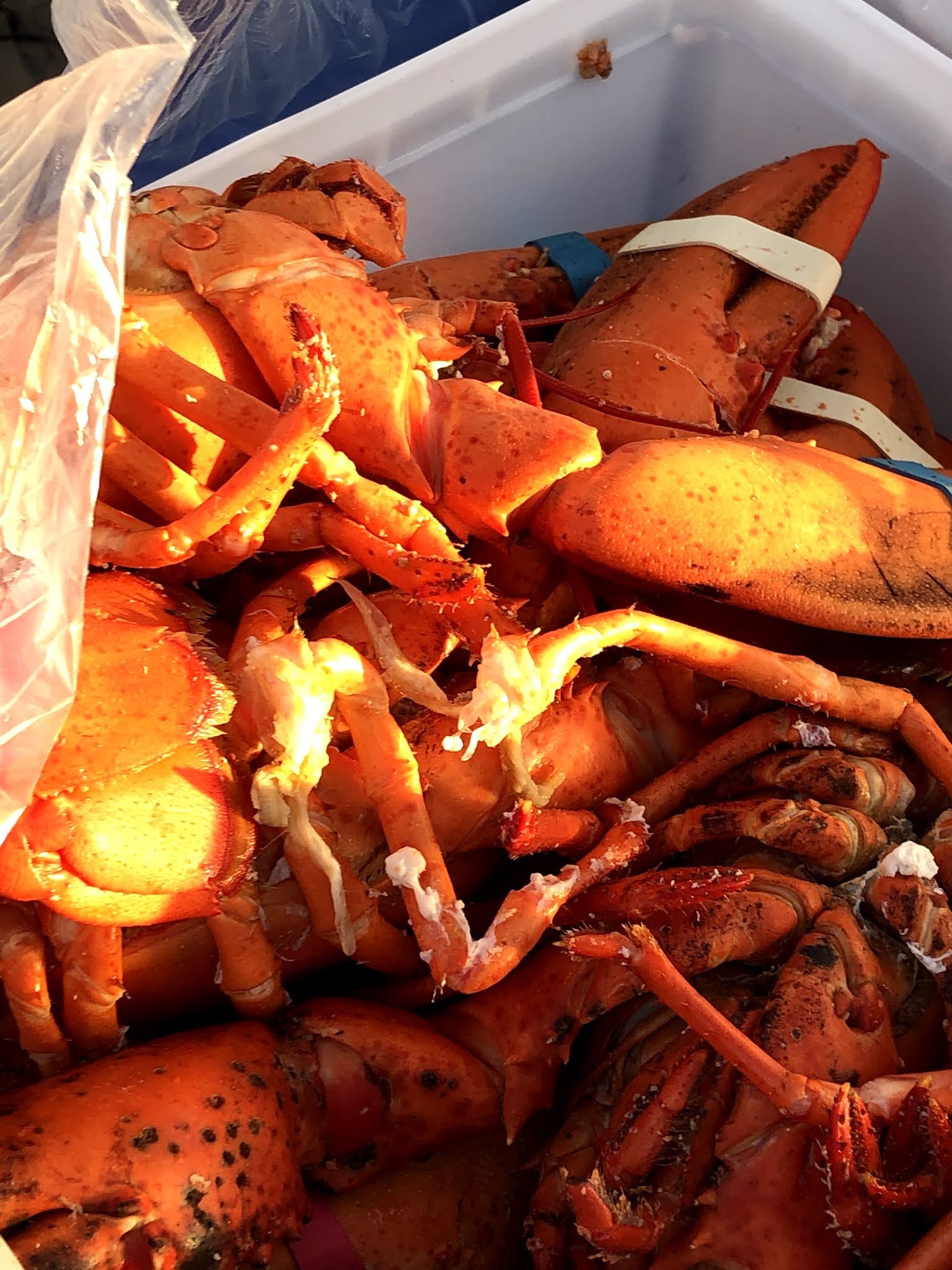
Our after-race party concluded the day in Menemsha with an awesome lobster dinner and beautiful sunset. How many $45 dollar races can you say got that benefit?!


This race was not about getting credit for a USAT race, qualifying for anything, or getting Ironman bragging rights.  It was simply about the joy of racing in a beautiful place during a pandemic.  And for that, we have Pierce and all of his ancestors to be thankful for!